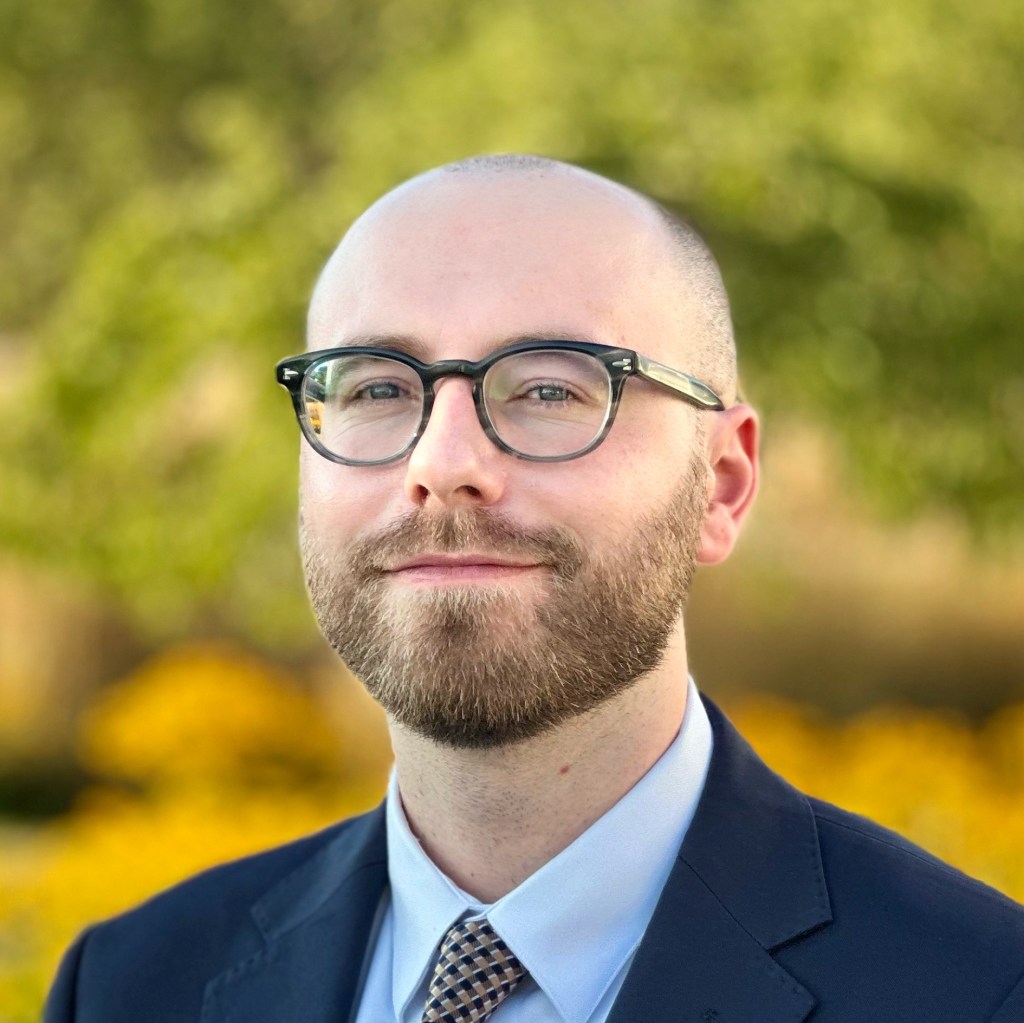
Karl Reinhardt // Associate Transportation Planner, Cambridge Systematics
Decisions about streets, highways, and transit systems shape air quality, safety, access to jobs, land use patterns, and the efficiency of industry. Few fields have such wide-ranging and tangible impacts on people’s daily lives.
Why transportation?
I work in transportation because I have always been fascinated by travel and the different and unique ways we all move through the world. From a young age, I gravitated toward walkable communities where daily life did not revolve around a car because they were so different from my usual surroundings. I grew up in suburban Connecticut where cars were a necessity for any sort of independence or freedom. I always felt this attachment to human-scaled cities, towns, and places because the walkability felt so fundamental to how I experienced them.
Over time, my curiosity deepened as I realized how central transportation is to nearly every aspect of society. Transportation sits at the intersection of public health, environmental sustainability, economic opportunity, and goods movement. Decisions about streets, highways, and transit systems shape air quality, safety, access to jobs, land use patterns, and the efficiency of industry. Few fields have such wide-ranging and tangible impacts on people’s daily lives.
I am also drawn to transportation because it is a derived demand: we rarely travel for the sake of transportation itself, but to reach work, school, healthcare, social connections, and other opportunities. That framing forces a more human-centered perspective—transportation is not the goal, but a means to living a full and connected life. Understanding and improving that system, while recognizing its ripple effects across communities and the environment, is what continues to motivate my work in the field.
And, of course, for those of us who will happily get on almost any train, the joy of movement never quite disappears either.
What’s your favorite way to get around the YPT-NYC region?
As a Jersey City resident, I have to say PATH, but I also love bikeshare so I must mention CitiBike. And nothing is more glorious than a ride on a ferry in the summer.
If you could snap your fingers and make one change to regional transportation, what would it be?
Just one change is really hard and while there is so much to be said about regional transit connectivity and governance or developing more sustainable transit funding mechanisms, I will mention the importance of updating U.S. fuel economy standards to disincentivize the production of larger passenger vehicles. Light-duty passenger vehicles in the U.S. have become increasingly large on average over the past several decades because larger light-duty vehicles like trucks and SUVs have less stringent fuel economy targets than sedans or station wagons. This has made it easier and cheaper for manufacturers to comply with regulations if more of their fleet consists of bigger SUVs and trucks that have these less intensive standards. While this is a national issue, incentivizing the production of smaller and more fuel-efficient vehicles will have local impacts for the New York region.
Who inspires you?
With it being the start of the Mamdani Mayoral Administration, it’s impossible to not be inspired by his successful mayoral campaign, which centered on affordability and transit. Mayor Mamdani was even sworn in as mayor inside the now unused City Hall subway station, symbolizing his commitment to transit riders. I have also been inspired by leaders in other cities who have made efforts to support public transit. Mayor Wu of Boston, who similarly advocates for affordability and improving public transit, comes to mind as another city leader that has inspired me as a transportation professional. I hope we continue to see many more local and state policymakers that support affordable, sustainable, and safe transportation lead more cities and states.
What advice would you give to your younger self?
I would tell myself to lean into my nerdy interests like city planning, infrastructure finance, and environmental policy because they can actually be the foundations for a great career 🙂
What are you working on currently that you’re most excited about?
As a sustainable transportation planning and policy professional, I am looking forward to continuing my work of supporting cities, MPOs, and states in determining how their various transit, electrification, bicycle and pedestrian, and many other projects are supporting their climate change mitigation goals. While the transition to zero-emission vehicles is a critical strategy for reducing greenhouse gas emissions in the short-term from the transportation sector, I get excited when transportation agencies view their work supporting public transit also as a critical climate change mitigation strategy. And increasing funding towards transit to expand service, improve reliability, or increase frequency has multiple layers of benefits that go beyond carbon reduction.
Do you have a favorite transportation book, blog, newsletter, podcast, or YouTube channel?
- Newsletters: Politico’s Weekly Transportation, Eno’s Transportation Weekly, Cambridge Systematics’ Safe System Weekly, and I also love the Today in Energy daily articles by the EIA.
- Podcasts: Talking Headways, Transit Tangents, and way too many others to list.
- I love the Youtube Channel @LifeWhereImFrom which is about various things in Japan and there is often discussion about transportation, land use, and city planning in Japan.
- I also love @RMTransit on YouTube as well for their thorough description and explanations of transit systems all over the world.
What is your favorite transportation-related fun fact or joke?
Grand Central Terminal has 44 platforms, more than any other train station in the world!
 YPT-NYC